This website uses Google Translate
You cannot use this feature without first accepting 3rd Party Cookies.
This website uses Google Translate
You cannot use this feature without first accepting 3rd Party Cookies.


You cannot use this feature without first accepting 3rd Party Cookies.
You cannot use this feature without first accepting 3rd Party Cookies.
How we prioritise reading...
It all starts with phonics!
At Roche we feel that reading is the cornerstone to progress in so many aspects of learning. We feel that children must learn to read in order for them to read to learn. The first step on this journey is the systematic learning of phonics. All children must crack the phonics code before they can develop fluency and automaticity as readers.
We teach phonics throughout EYFS, Key Stage 1 and this continues in Key Stage 2 for those requiring additional support to make progress. Our principle aim for phonics is to develop the skills to read fluently, as well as to build firm foundations of vocabulary.
We teach phonics through the Read, Write, Inc. Programme. Children are assessed every half term and grouped according to their progress. Those who are not making enough progress are immediately put on a catch-up programme to prevent them falling behind.
A summative assessment is made in Year 1 using the National Phonics Screening Test where children are tested on their phonics ability and their score compared to a National Average. Children who do not attain the expected score retake the assessment at a later date in Year 2.
Children’s reading books are exactly matched to their phonics ability and the content of the phonics lesson that they have each week. This enables children to practice the same sounds at home that they are learning in school. We hold 2 training sessions for Reception parents and carers on how phonics works to develop reading. We have a Parent’s phonics page on our website where they can access videos that compliment the learning that their children are doing in school.
The practice applied in phonics through the Read Write Inc. scheme is further developed in Key Stage 2 where we use the Read, Write, Inc. Spelling program.
A high proportion of staff are trained in the delivery of Read Write Inc. and school has a phonics leader who coaches and quality assures provision. School uses development days with representatives from the Kernow English Hub to further advance and maximise the impact of phonics teaching at every level.
How we promote a love of reading!
Engagement and enjoyment
In Reception class, we value the ‘five-a-day’ approach, which sees the children engaging in five texts, including stories, poems, information texts and nursery rhymes each day. This immerses the children in a wide range of vocabulary and allows their comprehension skills to be developed. It is a great precursor to the 'Shared Reading' initiative. The 'five-a-day' sparks and develops children’s levels of concentration and attainment in reading and writing, as well as their enjoyment and, ultimately, their love of reading!
Shared Reading
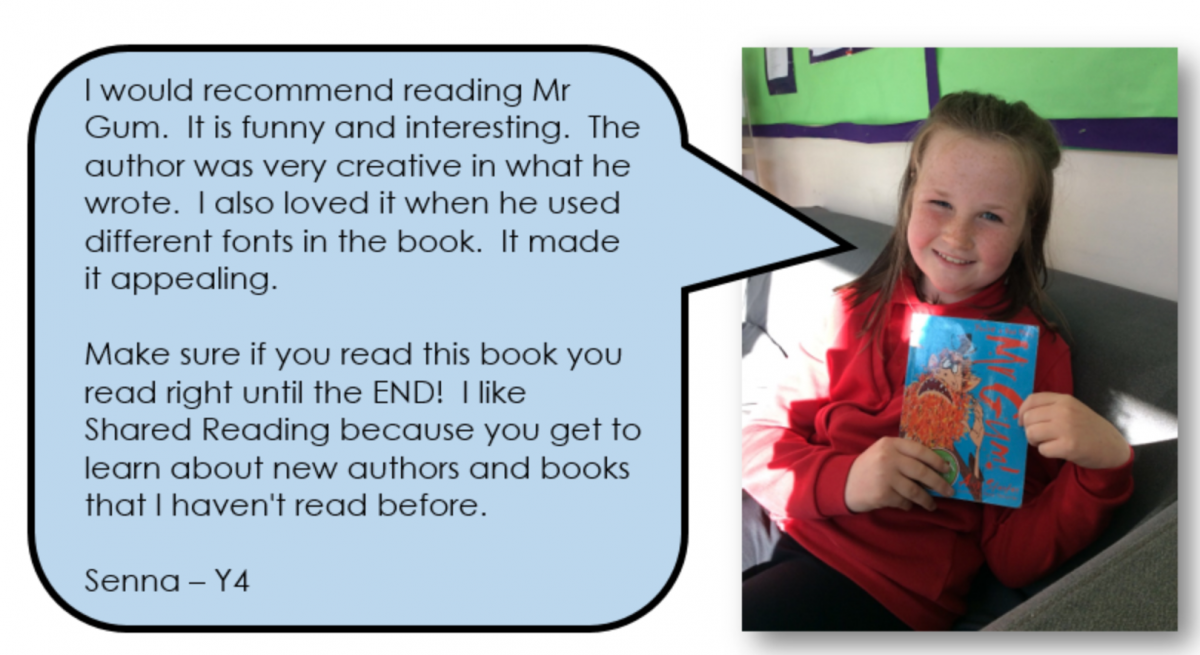
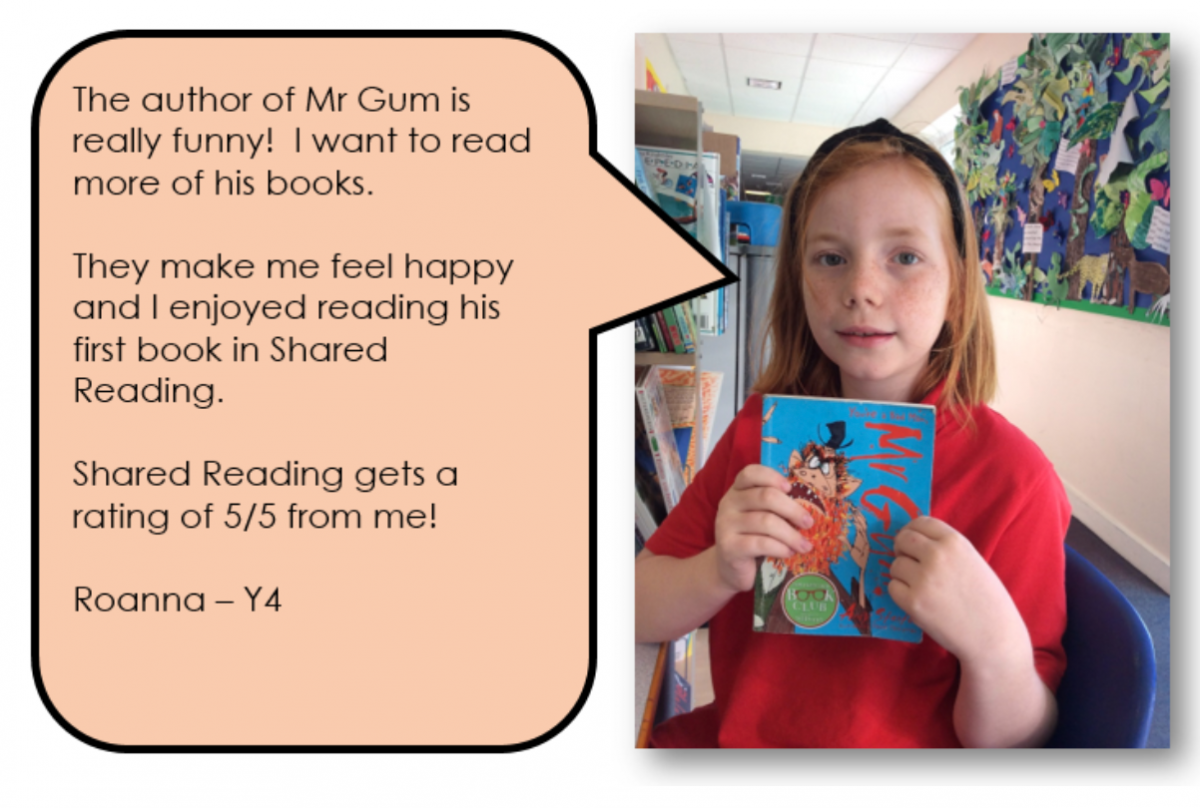
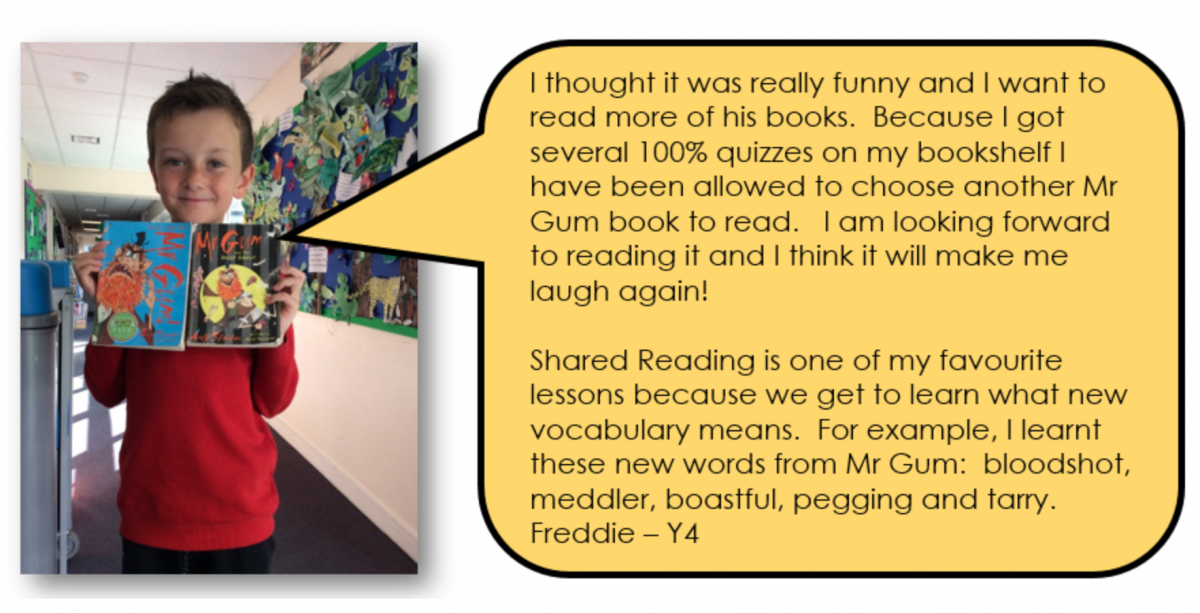
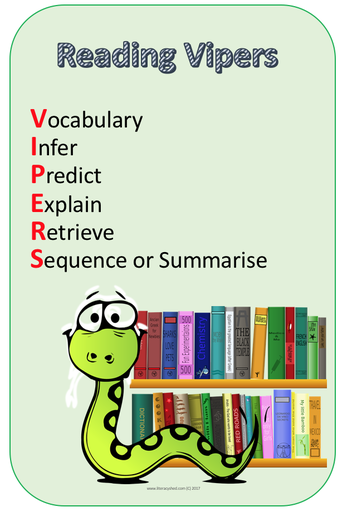
In response to our evaluation of reading, school developed it’s ‘Shared Reading’ initiative that sees each class reading three times a week as a group using whole class sets of texts so that every child has a book in their hands enabling the class to read, discuss and enjoy the story or information together, and in particular develop vocabulary. This initiative begins in the Summer Term of Reception class which enables a great transition to Year 1. It then carries on throughout the school. Each text is carefully chosen and has a meaningful rationale. Texts are chosen to be engaging and enjoyable and ensure that children experience a high quality reading experience. The ‘Shared Reading’ session is also used for teaching reading. We use a set of generic question categories known as VIPERS to structure the learning and practise of comprehension, inference and retrieval skills and encourage a focus on vocabulary discussion and application. Teachers have developed the questions used for each shared reading text in their class. Our frequent written comprehensions give teachers information on what skills the class have and need in terms of comprehension meaning that they can tailor the VIPERS questions to these domains giving the class opportunities to practise and apply the appropriate knowledge and skills, and ultimately progress.
We make the most of opportunities to read in subject areas such as History. This can also be a particularly useful context for reading and sharing non-fiction texts.
Time to read
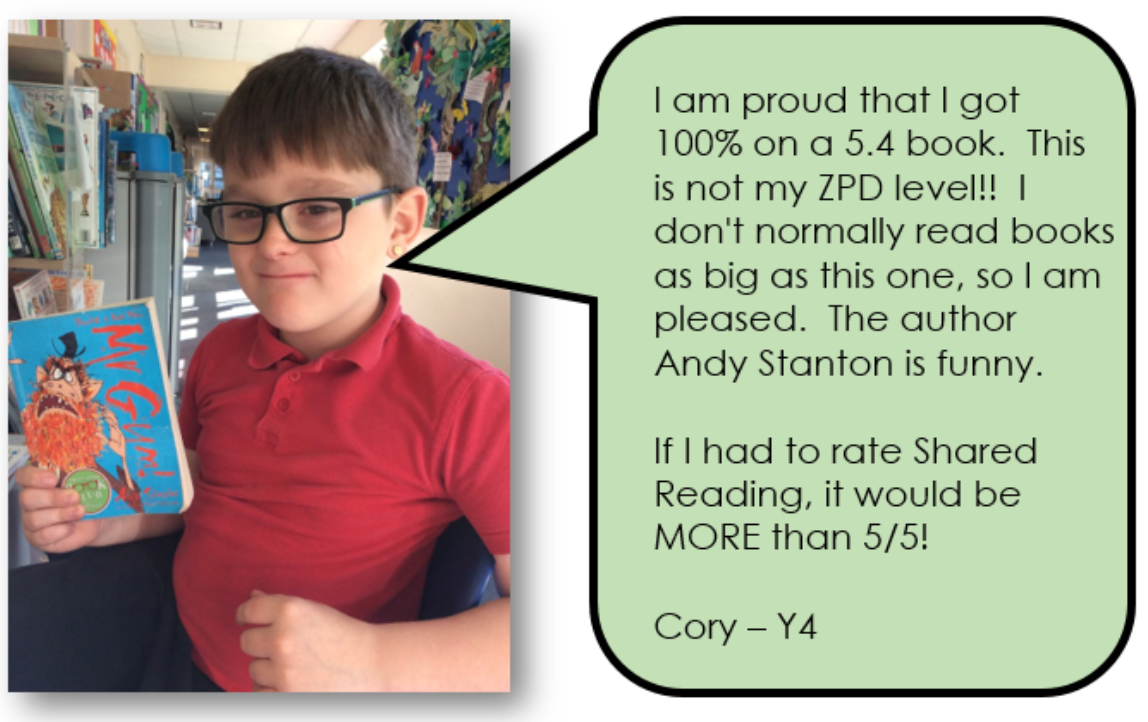
Whilst we encourage parents to read with their children throughout their time at school, we also commit time in school to read. Firstly, we dedicate time to individual independent reading to promote fluency and engagement, utilising the Accelerated Reader scheme with all children as soon as they complete Read Write Inc. phonics. Accelerated Reader offers a competitive element to reading, which encourages children to read as much as possible but also as deeply as possible. The Accelerated Reader system enables children to regulate their own progress and push themselves to read and achieve more. It promotes reading for meaning and develops comprehension skills alongside enjoyment and greater engagement in what they are reading. It also gives us clear information to share with parents about their child’s progress.
How we make sure that children make progress in reading
Read Write Inc. is our systematic approach and it starts with sets of sounds then moves on to Ditty books. Children then progress through groups with associated sounds and accurately matched reading books and writing activities. Children start this straight away in Reception Class. All children who have Read Write Inc. receive an hour a day Phonics lesson.
Phonics lessons follow the same sequence of teach, practise, revise, review and apply each time. Planning includes assessment of the graphemes taught. Phonics progress is assessed every half term to inform progression through the groups and to identify gaps in learning that may need to be met through intervention or additional teaching. School’s phonics lead coordinates and quality assures assessment of phonics.
The quality and consistency of phonics delivery is monitored by school’s phonics leader every two weeks via a learning walk that includes coaching and feedback. Regular staff meetings are held for all staff who deliver phonics to share good practice, new initiatives and coaching points.
In 'Shared Reading' the VIPERS approach to teaching reading is applied from Year 1 to Year 6. The consistent focus on 6 areas of learning in reading leads to consistency. Regular assessment through comprehension indicates strengths and areas for development within these 6 areas and informs teachers' planning.
Our Comprehension Strategy has transformed the way we continue teaching reading beyond learning in phonics. It is a direct Instructional approach to teaching the reading skills required to be able to retrieve and infer information from texts and gain deeper understanding of the role of vocabulary in conveying meaning.
Reading to Enhance the Broader Curriculum
We make the most of opportunities to read in subject areas such as History. This can be a particularly useful context for reading and sharing non-fiction texts.
Click on the individual year group curriculum plans on the main curriculum page to see the key texts that are used across each year group.
Reading for Pleasure
Alongside the reading systems in school that match texts to ability levels, children are able to access a range of fiction and non-fiction texts that they can read at home or with a parent or carer. We want children to choose books based on interest. We want children to engage with books for pleasure. We know that children will be exposed to new vocabulary and different genres by selecting their own books.
In addition to all other forms of reading, teachers read to their class every day. The stories and poems selected for this activity are chosen under a number of criteria that;